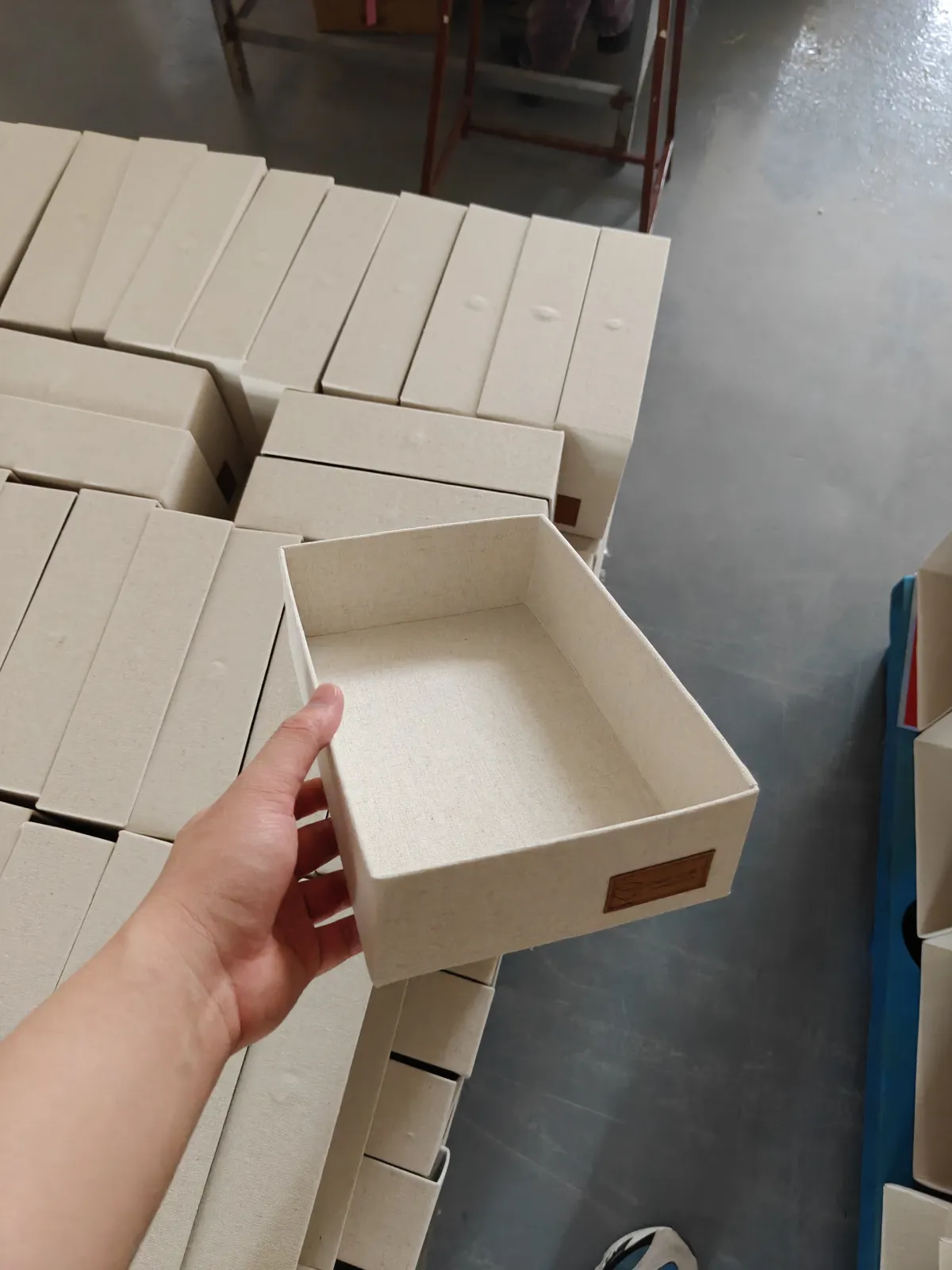
"What's your MOQ?" is usually the first question in the first email. It's a fair question, but on its own it doesn't tell you much. Two factories can both say "500 pieces" and mean very different things. Another can say "no minimum" and quote a unit price that makes the order pointless.
We take small trial orders, so we deal with this all the time. Here's how MOQ really works for private-label jewelry boxes and trays, and how to plan a first order that makes sense for both sides.
Why factories have minimums at all
A custom jewelry box isn't printed on demand. Before the first piece is made, someone has to:
- Draw the structure and work out the board cuts
- Set up cutting for your sizes
- Buy fabric, PU or lining, often by the roll
- Make or order the logo stamping plate or metal plate
- Make samples and adjust them
- Plan the order into the production schedule
That setup costs roughly the same whether you order 100 pieces or 2,000. With a small order, it lands on fewer pieces, so each one costs more. MOQ is the factory's way of saying "below this, the setup isn't worth it at our normal price."
The three things that really set the minimum
1. Material
Fabric and PU are bought by the roll, and colors come in minimum quantities from the mill. If you pick a color we already stock, there's no material minimum to worry about. If you want a custom-dyed linen or a special PU grain, the material minimum may decide your order size, not our workshop.
2. How much you change
There's a big difference between:
- Stock design + your logo. Our existing size and material, with your logo on a tab or foil stamped. This is the easiest way to start small.
- Modified design. Your sizes, colors or insert layout on a structure we already make.
- New design (ODM). A new structure built from your sketch or idea.
The more you change, the more setup, and the more sense a bigger order makes.
3. Logo method
A leather tab with your logo, or hot stamping, needs a plate but works on small runs. A custom metal plate or special hardware may have its own supplier minimum. Printed retail boxes have their own minimums too, separate from the jewelry box itself.
What "no MOQ" usually means
When a factory says "no MOQ" or "small orders welcome", including us, it usually means:
- They'll accept the order, but the unit price will be higher than at volume
- It's easiest with stock materials and sizes
- There may be a one-time charge for samples or the logo plate
That isn't a trick. It's just the setup cost showing up somewhere. A good supplier tells you up front where it shows up, so you can compare quotes properly.
How to plan a trial order that makes sense
Here's what we suggest to brands testing a new jewelry box or organizer on Amazon, Shopify or Etsy, or in a boutique:
- Start from something the factory already makes well. Look at their existing product lines and pick the closest one. Change size or color only if it really matters to your customer.
- Put your brand on it simply. A logo tab or one-color foil stamp is enough for a first run. Save the custom metal plate for the reorder.
- Keep packaging simple at first. A plain or kraft box with a printed sticker or insert card can work fine while you test demand. Fully printed retail boxes can come later.
- Ask for prices at two or three quantities. For example, your trial quantity and the quantity you'd reorder at. That shows you how the price drops and helps you plan your margin.
- Approve a proper sample. Don't skip it to save time. It's the reference the whole order gets checked against.
- Plan the reorder from day one. Ask what can be kept on file, such as drawings, the logo plate and color references, so the second order is faster.
Questions to ask about MOQ
When you're comparing suppliers, these questions get you a clearer answer than "what's your MOQ?":
- Is the minimum per design, per color, or per order?
- Can I split one order across two or three colors?
- Are there one-time charges (sample, plate, tooling)? Are they refunded or credited on bulk orders?
- If I use your stock material, does the minimum change?
- What's the price at my trial quantity, and at my target reorder quantity?
- Can you keep my logo plate and drawings for repeat orders?
Being honest helps both sides
The best first orders we see come from buyers who tell us the real situation: "We're a new brand, we want 150 pieces to test, and if it sells we'll reorder 1,000." That lets us suggest the cheapest sensible way to get started and keep the reorder in mind.
The worst outcome is when a buyer quotes a big number to get a lower price, then orders a fraction of it. The price no longer fits, everyone is frustrated, and the relationship starts badly.
Our approach
We don't set a fixed minimum. We quote based on what you want to change and how many you need. Small trial orders are welcome, especially on our linen jewelry trays and black PU leather stackable boxes, where we can use existing structures and add your logo. If your design needs a custom-dyed fabric or special hardware, we'll tell you about any material minimum before you commit.
If you're not sure what's realistic for a first run, read how to choose a custom jewelry box manufacturer, then tell us your product idea and quantity. We'll reply with prices at a couple of quantities and an honest view of where to start.